Outsiders
As an outsider, one often finds themselves on the periphery of societal norms and expectations. This position, while challenging, offers a unique vantage point from which to observe the world.
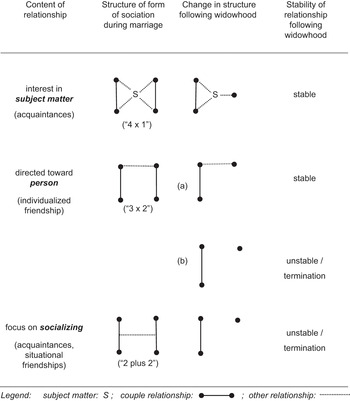
The sociologist Georg Simmel wrote about this phenomenon in 1908. He called it "the stranger."
Not someone who passes through briefly, but someone who arrives and stays, yet never fully belongs. The stranger, Simmel argued, possesses a particular kind of objectivity precisely because they are not rooted in the community's particularities and biases.
Outsiders can see the intricacies of social dynamics without being fully enmeshed in them, allowing for a clearer understanding of behavior and social constructs. They notice patterns that insiders take for granted. They question assumptions that go unquestioned by those born into the system.
However, the outsider status can also lead to feelings of isolation and alienation.
Being labeled as an outsider can create barriers to connection and understanding, making it difficult to form meaningful relationships.
And here is where theory meets lived experience: clarity of observation does not compensate for the loneliness of not belonging.
Pair this with a language barrier, and the result is me. And in this case, with a profound sense of otherness.
Language, I discovered, is not merely a tool for communication. It is also the architecture of identity itself. When you cannot express yourself with the ease and nuance you once possessed, you begin to feel like a diminished version of yourself.
The wit that came naturally in English becomes clumsy in Hindi. The confidence that flowed from fluency evaporates when you stumble over basic phrases. You become quieter. Smaller. More careful.
I missed my friends, teammates, classmates, and most importantly, a familiar routine. The academic environment here was vastly different from what I was accustomed to. I don't want to get too into it, but school here isn't your typical idea of school.
I "attended" a dummy school for 11th/12th graders to prepare for my board exams in 12th grade while simultaneously taking academic coaching to prepare for the Joint Entrance Examination (JEE) for engineering colleges in India.
It's a system in which extracurriculars and hobbies aren't valued until after you start your undergrad. To some extent, it's pretty neat how meritocratic the structure is (except for the reserved categories 🔗).
But it felt so limiting. I felt like I was being boxed in, and my potential was being stifled. In the next two years, I'll essentially eat, sleep, and dream physics, chemistry, and math.
You see, I had been taught that well-roundedness mattered. That the essays about track meets and side projects and community service would open doors. But here, those doors don't exist yet. Here, there is only the exam.
Perhaps this is what cultural displacement truly means. Not just the physical relocation from one place to another, but the deeper dislocation of finding yourself between two systems of meaning, two sets of expectations, two versions of what it means to be successful.
The American system taught me to perform multidimensionality. To be athlete, coder, straight-A student, all at once.
The Indian system demands singular focus. And in that difference lies a fundamental clash of values that no amount of adaptation can fully resolve.
But alas, dwelling on the bad doesn't make it better.
Vinod Khosla, Sundar Pichai, Satya Nadella, and Aravind Srinivas all did the same thing. They made it out fine. So will I (🤞).

But it's not all bad. Being an outsider has its perks. It allows for a fresh perspective, unencumbered by preconceived notions and biases. Outsiders can challenge the status quo and bring new ideas to the table. They can be catalysts for change, pushing boundaries and expanding horizons.
And also, It seems like I'm the only one my age in this entire city who actually codes, builds projects in public, and networks like I do on LinkedIn. It's a superpower, really, accompanied by a lot of loneliness.
Perhaps that's the paradox of being a stranger in the sociological sense: you see more clearly precisely because you don't fully belong. But clarity doesn't keep you warm at night.
You are neither here nor there. You are Simmel's stranger, occupying that curious position of simultaneous closeness and distance. And the question that haunts you is not where you are, but where you belong. Or whether belonging even matters when you've learned to see clearly from the margins.
Now we approach the end of today's ramble. Being an outsider is multi-faceted, to say the least.
I tell you this not to complain, but to document. Because I suspect that years from now, when I've made it through the system and emerged on the other side, I'll want to remember what it felt like to be here.
On the periphery.
Watching.
Thanks for reading.
And oh, I almost forgot. This marks the end of month 1 in India. Only 83 more to go.