The Ikigai Within
After years of chasing achievement and external validation, I started to feel like I was running without direction.
I had hit some goals, built some projects, checked boxes that seemed to matter at the time, and yet, something remained missing.
Because meanwhile, the why behind all the what had been blurred into obscurity.
I'm not claiming to have it all figured out. Far from it.
I'm 17, navigating a gap year in a country I'm still relearning, caught between the education system I left behind and the one I'm trying to enter.
I haven't built a unicorn startup or done anything that would make headlines or landed at FAANG or MANGO or whatever you want to call it.
But I have done enough to know what it feels like when motion replaces meaning.
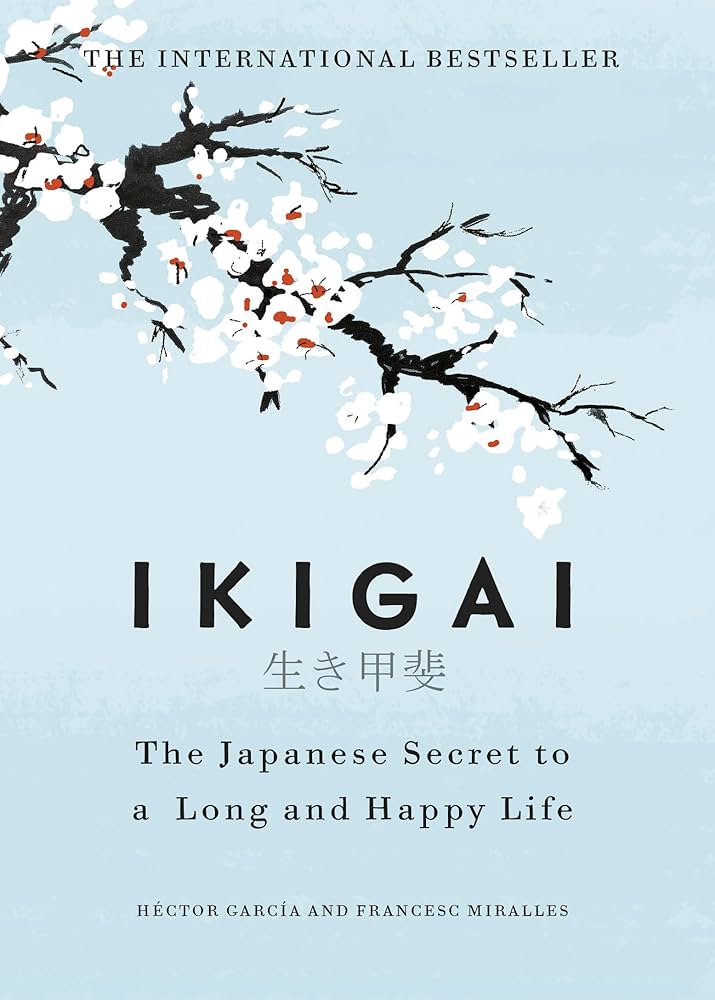
Around that time was when I first picked up Ikigai: The Japanese Secret to a Long and Happy Life 🔗 by Francesc Miralles and Héctor García.
I don't think words printed on a page have ever resonated with me as deeply as they did in this book.
Initially, I believed it to be just one of those lightweight "find-your-purpose" self-help books, the kind that promise transformation in five easy steps and deliver nothing but platitudes. But very quickly I realized that this was not the case.

I'm not writing this from a place of having found my ikigai. I'm writing it from the middle of the search, where the questions are clearer than the answers, but the questions themselves feel like progress.
Ikigai, which roughly translates to:
reason for being
is the intersection of four circles: what you love, what you're good at, what the world needs, and what you can be paid for.
It's a relatively small word that encapsulates a big truth: that meaning doesn't come from success itself, but from the balance between passion, skill, and service
You can't fake it, and you can't force it. It's not about constant productivity or climbing some imaginary ladder. It's about alignment.
And this is where it got personal.
For so long, I equated motion with progress. If I was training harder, coding longer, or learning at a faster rate, I assumed I was moving toward something worthwhile. But looking back, a lot of that effort came from fear of losing the edge, fear of being outpaced, fear of no longer being "that guy."
I wasn't driven by curiosity, I was driven by comparison.
I had become, without quite realizing it, a performer in a production I didn't write.
Ikigai flipped my perspective on this. It made me question not just what I was doing, but why I was doing it.
Was I coding because I loved building things that could help others, or was I just trying to prove I could keep up with my peers? Was I running because it brought me joy and clarity, or was I chasing times and rankings to validate my worth?
I don't have clean answers to those questions yet. But asking them felt like breaking a contract I didn't remember signing.
The authors talk about Okinawan centenarians who wake up every morning with a reason, whether it's tending to the garden, teaching, or cooking for their family. Their secret isn't some grand ambition; it's steady meaning.
And maybe that's what I was missing. I had built with momentum, but not direction.
Perhaps the West teaches us to seek meaning in achievement, while the East understands that meaning exists in the act itself.
One way produces résumés.
You see, I had been taught, by schools, by peers, by the entire architecture of American and Indian meritocracy, that value comes from outcomes. From the trophy, the test score, the acceptance letter, the job offer.
And when I lost access to that system, when paperwork decided my future where merit could not, I kept performing for an audience that was no longer watching.
Ikigai offered something different. Not a promise of success, but a framework for meaning that exists independent of external validation. And that felt radical in a way I'm still processing.
I haven't implemented all the lessons I learned just yet. My mindset has shifted, but my habits are still catching up. If The Curse of Competence taught me how dangerous it is to live for external expectations, Ikigai showed me the other side of the coin:
that fulfillment doesn't come from escaping the grind, but from redefining why you're in it in the first place.
Competence built the treadmill. Ikigai taught me how to step off of it, look around, and walk my own path. One that's quieter, slower, but infinitely more alive.
And I wonder now, looking back at all those mornings I woke with dread instead of purpose, whether I was running toward something or simply away from the stillness that might have forced me to ask these questions sooner.
I'm still asking them. But at least now I know they're the right questions to ask.
Perhaps that's what displacement teaches you. Not where you belong, but why belonging mattered in the first place.
Thanks for reading.